Why More Mountain Cabin Owners Are Choosing TV-Free Living Rooms
May 12, 2026
Many mountain cabins have traditionally been designed around one central point - the living room. A large sofa facing a TV screen, evenings built around movies and furniture arranged with entertainment as the main focus.
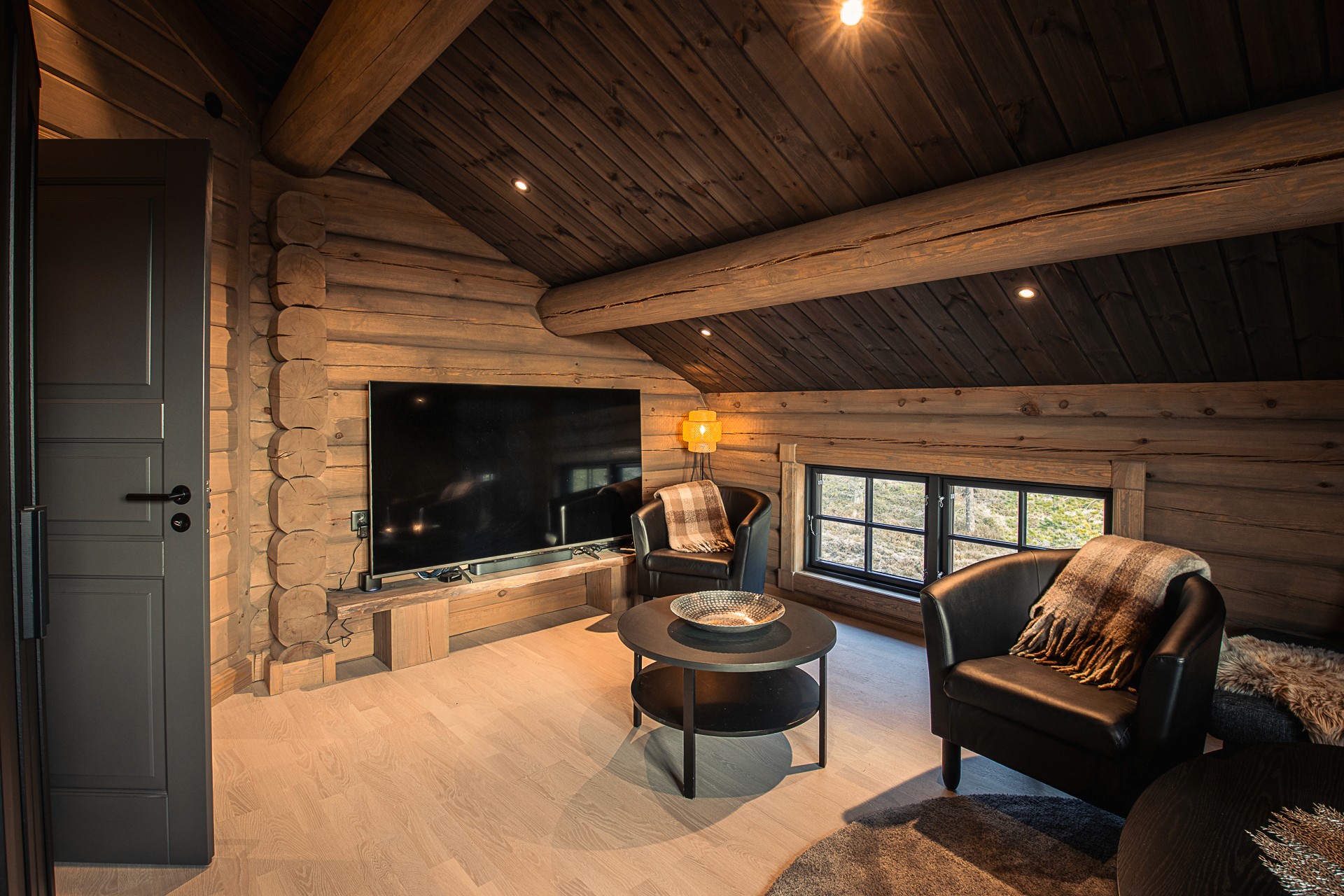
But lately, we have noticed an interesting shift in how people design their cabins. More and more families are choosing to create separate TV rooms while keeping the main living room completely TV free. At first, it may sound like a small design decision. In reality, it changes the entire atmosphere of the home.
Living Rooms Are Becoming More Social Again
Without a television naturally dominating the space, the living room often becomes calmer and more connected to its surroundings.
Furniture turns toward:
fireplaces
panoramic windows
mountain views
conversations
shared meals
board games
evenings with books or music
The room begins to feel less like a media space and more like a retreat. Especially in mountain cabins, where people come to slow down and reconnect with nature, this creates a very different feeling inside the house. Large floor-to-ceiling windows suddenly become the “main screen” of the room. And honestly, watching snowfall over the mountains or evening light across the forest rarely needs competition from a television.
The TV Room Is Not Disappearing, It’s Simply Moving
What is interesting is that people are not necessarily giving up TV or entertainment. Instead, they are designing it with more intention. Dedicated TV rooms are becoming increasingly popular:
smaller and darker cozy spaces
comfortable sofas for movie nights
gaming areas for children and teenagers
This creates balance inside the cabin. One room encourages activity and entertainment. Another encourages rest, conversation and presence.
Mountain Cabins Are Becoming More Experience-Oriented
We also see that modern cabin owners think differently about how they spend time indoors.
After skiing, biking, hiking or long days outside, many people now prioritize wellness, slower evenings, saunas, cooking together, quality conversations and enjoying the surrounding landscape. The cabin itself becomes part of the outdoor experience rather than a place to escape into screens. This is especially visible in Scandinavian mountain architecture, where natural light, views and atmosphere play a central role in the overall design.
Designing Around Lifestyle, Not Only Layout
What makes this trend particularly interesting is that it reflects a bigger change in priorities. People are no longer designing homes only around square meters or practical room counts They are designing around how they want life to feel. And in many modern mountain cabins, that feeling increasingly includes calmer living spaces, intentional entertainment areas, stronger connection to nature and more room for real presence
Sometimes the most luxurious part of a mountain cabin is not the technology inside it. It is the ability to sit quietly by the fireplace, look out through large windows and simply enjoy where you are.